
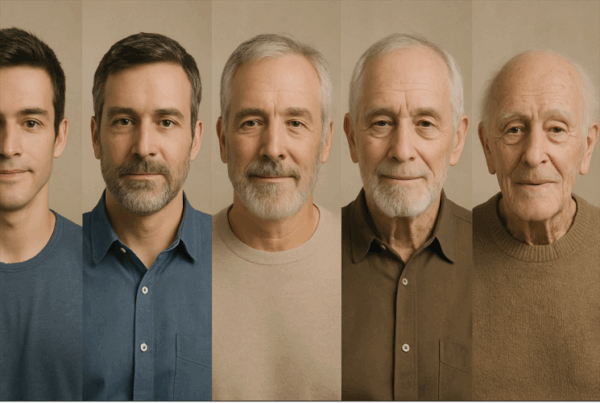
I recently read a Wall Street Journal article titled “What It Feels Like to Grow Old–All in a Special Suit.” It described MIT’s Age Gain Now Empathy System, or “Agnes” suit, a remarkable creation that allows people to experience the physical and sensory limitations that accompany aging. The story hit home for me. Now in my sixth decade, I’m grateful for good health, but I’ve also begun to notice the quiet reminders of time … the occasional ache, a little less spring in my knees, and eyesight that’s not quite as sharp as it once was.
It resonated even more because I’ve spent time with Joe Coughlin and his team at MIT’s AgeLab, who pioneered this work. Joe has long been a visionary in helping companies understand both the realities, and the vast potential, of an aging society. His research reminds us that aging isn’t a single point in life but a continuous journey we’re all on. It’s physical, cognitive, emotional, and deeply human.
The Agnes suit might simulate aging, but it uncovers something very real: that empathy, not efficiency, will define how we meet this demographic moment. As the U.S. population grows older faster than ever, nearly every industry will need to rethink its assumptions. For too long, innovation has designed around youth, always aiming for what’s faster, flashier, and newer. Whether it’s GLP-1s, functional medicine, health trackers, or supplements intended to extend vitality, the question isn’t just how to help people live longer, it’s how to help them live well at every stage of life.
We often talk about the aging population as a looming challenge, with more healthcare costs, more dependency, more strain on systems. But there’s another, more powerful story to tell. Older adults are healthier, wealthier, and more engaged than any previous generation in history. They are consumers, caregivers, volunteers, and entrepreneurs, shaping markets and communities in significant ways. What Joe Coughlin calls the “longevity economy” represents not just trillions of dollars in spending power, but also an untapped source of wisdom, creativity, and purpose. The companies that recognize this shift and design products, services, and experiences that honor it won’t only capture new markets, they’ll help redefine what it means to live well as we age.
Designing for Dignity: Building Products and Systems That Honor Aging
If empathy is the starting point, design is where it becomes real. The best companies go beyond reacting to demographic change; they anticipate it, creating products and experiences that honor the complexity, diversity, and dignity of aging.
One small example from my own life helps make the point. When I stay in a hotel, I often find myself squinting in the shower, trying to read which bottle is shampoo, conditioner, or body wash. The labels are elegant but nearly illegible, with small print, low contrast, and a design meant for someone with perfect close vision. It’s a small frustration, but it points to something bigger: most products are designed for people in their physical prime, not for those whose eyes, hands, or reflexes have changed over time.
Empathy is more than a moral virtue; it’s a strategy for innovation. MIT’s “Agnes” suit shows how much design can shift when people experience aging firsthand. A store manager who has worn the suit quickly sees how confusing aisles become when signs blur. A designer realizes how painful it is to twist open a tightly sealed bottle. These small moments spark insight, leading to clearer packaging, easier-to-use products, and more accessible layouts. When you design for the 80-year-old, you almost always make life easier for the 18-year-old too.
For me, empathy is also deeply personal. When my dad was diagnosed with Alzheimer’s, our family learned that no technology or program could replace the role of an empathetic caregiver. Compassion and connection weren’t just comforting, they were essential. That experience reinforced something I’ve learned throughout my career: in healthcare, the human side isn’t separate from progress; it’s what drives it. When we understand the frustrations, limitations, and hopes people live with, we can design solutions that meet them where they are. Empathy is what pushes innovation forward.
Why Health Care Must Lead
Nowhere is empathy more critical than in healthcare. The system already serves older adults, but it needs to evolve from reactive care to proactive leadership in how we experience aging. For too many, healthcare feels like a maze of appointments, referrals, and billing codes that make sense to the system but not to the patient. For older adults, every extra step adds stress and risk. Simplifying navigation, coordinating care, and reducing friction aren’t just operational fixes, they’re acts of empathy that build trust.
It also means recognizing that “older adults” aren’t a single group. A 65-year-old retiree in good health has very different needs from an 85-year-old living alone. Younger seniors often seek independence, travel, and digital convenience. Older seniors may face declining mobility, multiple chronic conditions, or cognitive changes, so their needs often center on safety, reliable caregiving, and preserving dignity. Designing for this full spectrum isn’t easy, but it’s essential.
The most forward-thinking organizations are showing what this looks like:
- Designing for simplicity. Complexity becomes friction as people age. Companies like Apple and Philips have led the way with intuitive, accessible designs that empower rather than patronize. From the Apple Watch’s fall detection and ECG monitoring to Philips’ remote patient-monitoring systems, these innovations help older adults stay independent while maintaining connection and confidence.
- Integrating care into daily life. The next generation of healthcare products must meet people where they are – at home, in routines, and among loved ones. Investments in home-based care, digital companionship, and remote monitoring are improving outcomes and restoring dignity and belonging.
- Designing with, not for, older adults. The best innovation happens when those it serves shape it directly. Involving older adults in testing, design, and advisory roles ensures that solutions reflect lived experience, not assumptions.
- Using technology to simplify, not alienate. Artificial intelligence and automation hold enormous potential to personalize care and reduce administrative burden, but they must serve humanity, not distance it. The goal is not only to make systems smarter but also to make them kinder.
As I’ve written before, AI can be a powerful enabler. Used thoughtfully, it can reduce complexity, personalize experiences, and anticipate needs. Virtual assistants can remind patients about medication or appointments. Predictive analytics can flag when someone may need help before a crisis. Natural-language tools can allow people to ask questions in plain words and get clear answers. But AI should enhance, not replace, human care. During my dad’s Alzheimer’s journey, nothing matched the compassion of caregivers, a lasting reminder that empathy can’t be automated.
Finally, empathy can be practiced, not just preached. Companies can create opportunities for leaders and employees to literally step into their customers’ shoes. Whether through suits like Agnes, simulation labs, or immersive training, experiencing the world as an older adult reshapes how we see and design. I saw this firsthand when my executive team participated in empathy exercises while I was leading a healthcare organization. It was humbling and transformative. We left those sessions committed to mapping every customer pain point and redesigning processes to make care easier, more personal, and more human.
______________
Too often, aging is seen as a burden, a cost to be managed. In truth, it’s one of the greatest opportunities for innovation and impact in the years ahead. The Agnes suit may simulate the physical and cognitive changes that come with age, but the real lesson is we don’t need a suit to learn empathy. For me, this is more than a professional interest. Aging is a journey we all share, not something happening to “other people.” Designing for it carries both opportunity and responsibility. When we create products and systems that support today’s seniors, we make life better for everyone and leave the world a little more compassionate than we found it.