
Disrupt or be disrupted?
It’s a question facing many companies that are seeking to use technology to disrupt long-standing industries.
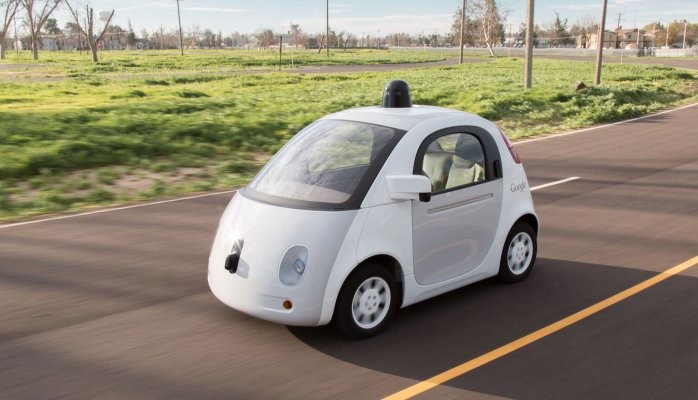
Case in point: Google is looking to turn the automobile industry upside down with the autonomous Google Self-Driving Car, with a driver behind the wheel for support. These Google cars have logged more than one million miles. Ford, Google, Uber and others recently teamed up to accelerate their efforts.
There is potential benefit from self-driving cars. According to the Eno Center for Transportation study, if “90% of vehicles in the U.S. were self-driving, as many as 4.2 million accidents could be avoided, saving 21,700 lives and $450 billion in related costs.” Mental health, such as reducing stress from commuting to work in large metropolitan areas, is another potential benefit.
While significant attention is focused on these autonomous cars, the principles of the technology behind them are attracting attention for their potential to bring automation to other industries, such as health care. Yet it also raises a question:
- Can the technology behind autonomous cars disrupt the $3 trillion health care industry?
The answer is no. While autonomous cars may impact drivers and other areas of transportation, the technology won’t replace those who provide care, but only make them more effective in personalization of care. Here’s why.
Machine Learning
Google and other companies are using the principles of machine learning to create self-driving vehicles. Machine learning is defined as “a type of artificial intelligence (AI) that provides computers with the ability to learn without being explicitly programmed.” The Google car adjusts on the fly due to machine learning. Using data analytics, it learns to react to a car cutting into its lane or a pedestrian running across the road. It’s able to quickly collect this data in real time to navigate the road.
The use of data analytics in health care has very strong potential and is already being widely embraced across the health care spectrum. According to a McKinsey report, big data could achieve “$300 billion to $450 billion in reduced health-care spending.” The connectivity within the health care system necessary to support big data is progressing. The 2016 HIMSS Connected Health survey showed that “52% of hospitals currently use three or more connected health technologies and 47% expect to expand their use of connected health technologies in the next few years.”
While we’ve just barely scratched the surface of big data, initial results are very encouraging. Last year at Humana, we utilized data analytics to close 3.9 million gaps in care for our members, and we also used health risk assessments and predictive modeling capabilities to identify 1.1 million members to engage them in clinical programs.
Machine learning systems that can analyze a patient’s history and offer recommendations, similar to how an autonomous car can navigate the road, could provide value, but they will primarily be focused on generating efficiencies, not replacing the clinicians who deliver care.
My Own Experience
Health care is very personal and can be very emotional. People will always seek and value the personal touch and empathy from the providers and caregivers who know them best. Some interactions simply can’t be quantified, such as the trusted, personal relationship that a physician builds with a patient by helping them with their diabetes.
Recently, I experienced this empathy and emotional connection. I had the opportunity to visit one of our member’s homes. Let’s refer to him as Sam. Sam just had his 88th birthday, but he has had both legs amputated because of serious complications of diabetes. I was amazed at Sam’s strength, but I was more astonished by the strength of his daughter. She and her husband are the caregivers for both Sam and his wife, who is also facing health issues – using a walker and suffering memory loss.
Humana is providing four hours of nursing services each day to give the daughter a break from the stress of providing 24-hour support. I asked Sam’s daughter what gives her the energy to offer this kind of support. She said, “My parents deserve to stay in their home; this is the comfort and well-being they have experienced all their working lives. I can’t deny them this simple pleasure.”
I tell you this story because no technology will be a substitute for a smiling face, assisting in feeding or comforting with an arm to hold. Physicians, clinicians or family members simply cannot be replaced by machine learning in health care.
A Path Forward
Machine learning allows simplicity, proactive response to medical conditions, and elimination of administrative inefficiency, which ironically allows more resources and time for the provider and the family care giver to assist and comfort the patient.
Technology isn’t just for processing health care claims more quickly and more efficiently or for proactive responses to medical conditions. It’s about using technology — as part of an integrated, holistic approach with clinical care led by physicians — to quantifiably and qualitatively improve the health of the people who need it.
Autonomous cars may impact the automobile industry, but the technology will support, not replace, the people we’ve trusted with our health. If advances in technology through disruption do not lead to tangible benefits to consumers, whether it’s a healthier country, more time for physicians with their patients, or lives saved with self-driving cars, we’ll just be spinning our wheels.